Search This Blog

Showing posts with label Analysis. Show all posts

Saturday, February 23, 2013

The Hero of Kill Bill

I enjoy the Hero's Journey story. It is extremely classical and looking at the base elements it seems kind of boring, but in practice there are innumerable different ways to tell that basic story, especially when certain elements are subverted or ignored. Looking back through Tarantino's filmography the one story which really stands out is the Kill Bill movies/movie. Technically they were released as two volumes, but they were intended to be one and were only split because of the non-profitable four hour run time. Kill Bill follows the basic Journey archetype with a few very interesting diversions.

One of the defining points of the Hero's Journey is the death and resurrection of the main character that happens near the end. Classic examples include Harry Potter 'dying' at the end of the Deathly Hallows or for something more Mythological something like Hercules departing to the underworld during his twelve labors. What is interesting about Kill Bill is there are two points which could be considered a death and rebirth, though one is more significant than the other. The first is when The Bride is shot at her wedding rehearsal and goes into a coma for four years. After this her determination for revenge overtakes everything else and she wants to commit the eponymous act, killing Bill.

The second resurrection occurs at a point more fitting in the Hero's Journey structure, about halfway through volume two, or at the end of the second act. Here The Bride is buried by Bill's brother and left to suffocate. She breaks out after remembering her training with the mentor. In a traditional journey of course the mentor assists at the beginning of the journey, introducing the character to the new world. In Kill Bill there could truthfully be two mentors, one more obvious and one more subtle. Pai-Me teaches the Bride how to fight with a sword, and trains her so hard she becomes a nearly unstoppable killing machine. He also shapes her outset majorly creating the cold demeanor that she puts on when fighting the people she blames for her child and groom's deaths.

The second mentor here is Bill, who serves a very different purpose narratively but also is core in shaping Te Bride's character. He is of course the antagonist and the titular character, but he is also a past lover of the Bride, and someone who she still has feelings for, even if they are confusing. With this said looking at the film from the perspective of beginning at The Bride re-awakening from her coma and ending with Bill's death it leaves us with no clear mentor, except for in flashbacks. However because the film is told non-linearly it could be considered that it still fits in the typical order of the journey because of the order the audience perceives it in, not necessarily the chronology of the film.

There are a few elements still missing from the traditional journey however, such as the refusal of the call. This again occurs before the events of the film starts, as The Bride has declined to be an assassin, refusing to go back to that world of murder and violence. Considering the world she finds herself embroiled in after waking up from her coma it is ironic that she refused, and then entered of her own will, but that is a crucial point of the journey. Here again because of the non-linear perspective of the film it molds itself better to the Journey than if it was told in order.

Even with all these sort of disparate and contrary elements there are still a number which fit perfectly. Though there is nothing necessarily supernatural about the aid the Bride receives in her new katana, it is said to be of such fine craftsmanship that it can cut god, and thus is effectively supernatural. With this new weapon and her training The Bride sets out to kill her first target. This is the crossing of the first threshold, and in her successful murder of this woman she has metaphorically entered the belly of the whale, and there is no turning back.

After this she undergoes a series of tests where she fights the three people leading up to Bill after crossing that first threshold. During the second test she actually fails and is buried, and has to dig her way out. This is a common feature of the Journey, and the failure only makes her grow stronger, even strong enough to defeat Bill. Of course when it gets to that point there is no elaborate fight scene, just a long talk, and then she kills him with one punch. He accepts his fate however and walks into death like he expected it. By doing this The Bride has also righted wrongs with an effective father figure, and by doing this has allowed herself to move on.

In the final scene The Bride is seen weeping as she is afraid to return to a normal world, and is full of grief for Bill and all the other people she killed. This could be seen as any number of end steps, but in the end there is no happy ending, The Bride has to accept what she has done and acknowledge that her life can never be the same. This is another point where Kill Bill differs from the Journey, there is no happy ending, and very little resolution, simply an ending that shows all the pain that such terrible violence causes.

Monday, February 11, 2013

Sacrifice

Self sacrifice is often considered one of the most selfless acts any person can commit. The death of one for the lives of many, it involves someone looking past themselves and considering the people they could save while giving up the one thing that they can never get back. Of course it means less in worlds with resurrection ie comics or Shonen but still, it is one of those things that is expected of any hero following the archetypal journey. Yet it is not always entirely selfless, and sometimes actually hurts those around the person more than they would have otherwise.

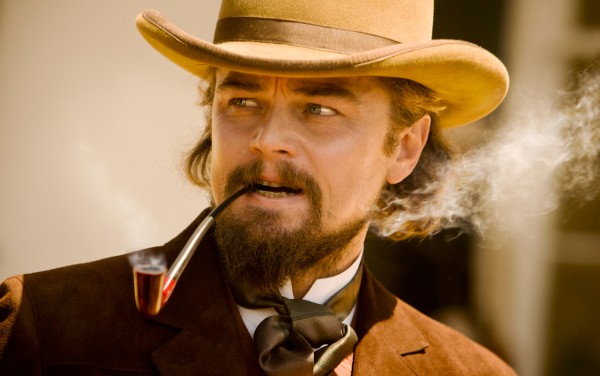
For this I will look at several case studies. The first is Django Unchained. There will be spoilers, and spoilers of plenty. During the end of the film the two protagonists have been pulling off a con on a plantation owner named Candy and it has been found out, so Django and the dentist whose name I actually forget have to pay a large sum of money to get his wife back instead of the little they wanted to play. As they are leaving Candy insists they shake his hand to add insult to injury, but it is the last straw for the dentist. He takes out his pistol and shoots Candy, even apologizing to Django as he does it. He knew he would die for it, and does almost immediately afterwards, so it is a self sacrifice of sorts.
Candy


Throughout the entire film this man had shown his hatred for slavery and in general anyone he considered evil and Candy fit in both categories. Eventually it just got to him and he couldn't resist killing this evil man even though he knew it would cost his life. He also knew that it would hurt Django, and almost resulted in his castration and loss of his wife, but because of his principles he couldn't resist, and so executed Candy. Because of the enormous shootout that resulted from this action it was clearly a selfish act, almost killing Django and his wife, all because of killing one man. Here the sacrifice actually loses more lives than it saves, but the morality of both parties comes into question, as well as how much any given life is worth.

The theme of sacrifice also pervades the TV series Buffy the Vampire Slayer. It's not a film, but whatever, it's close enough. Buffy herself constantly fights to maintain a normal life despite being the Chosen One. For centuries this had prevented the Slayers from being normal in society, and they had lived at the fringes friendless with only a Watcher to give them some companionship. Buffy however functions differently, going to high-school and finding a small group of friends who endure with her for many years, because she declined to sacrifice so much of her life.

Living this life cost her however, as she lost friends and companions, as well as having to save them on a near weekly occasion. Eventually she ended up sacrificing love to her cause, as there was not enough time and it hurt her too much to lose boyfriends. In the end of season 5 her sister has been used as the key to begin an apocalypse and a massive vortex of energy is close to swallowing up the entire world. Buffy stands with her sister staring at the approaching doom and knowing that the sacrifice of her sister would end the coming Apocalypse. She refuses to do this however as she has lost nearly everything by that point, and no longer wants to live with all the pain and suffering that comes with the world, basically shouted to the heavens in the musical episode.


In the end she sacrifices herself in one of the few really selfish actions she does in the show. I'll explain here, it is selfish because she it the Chosen One. Normally when a Slayer dies another one arrives so there is no real change, but Buffy already died and changed the cycle so her new death does nothing except lose the world a huge bastion of good in the fight against evil. Demons constantly feared Buffy and she help to avert numerous plural of apocalypse over the series. She was one of the few reasons the world still worked as it did but she grew tired of it. The whole Slayer job doesn't have a great life expectancy and Buffy managed to die twice before her 21st birthday.

The other option for her was to let her sister die. Her sister was created to birth and destroy the vortex, killing her would have ended the cycle and let the world continue like normal but Buffy couldn't live with that, and so sacrificed herself leaving her friends to deal with the consequences. This involved them trying to fight off vampires and demons rather unsuccessfully, and trying to fool the world that Buffy was still around, because without her Sunnydale would sink into darkness, and the world would soon end. She loved her sister too much and so died for her, letting the world fall to hell if it liked to. Her sacrifice was the most selfish thing she could have done.

There are numerous instances of similar things to this happening, with self sacrifice leading to nothing but pain and suffering for those who survive. Some people just wish to go out in a blaze of glory because life is too tough, and they simply can't bear to live. It is interesting how a culture that frowns on suicide so much is so accepting of a 'noble sacrifice', even when it dooms so many people. Maybe it's the fetish for heroism that does it, but modern culture seems to love the sacrifice, especially when it saves a number of people, it is considered a fitting end to a story, and that is sad.

Saturday, February 2, 2013

It Happened One Night

It Happened One Night is a romantic comedy. Perhaps one of the quintessential examples of the genre and one of the best in terms of critical acclaim. In 1937 it one the "Big Five" Oscars, Best Picture, Director, Actor, Actress, and Screenplay, a feat which has only been duplicated twice since. In other words it is a very good film. The title however is a bit of a misnomer as the events of the film do not happen over one night, but several, a couple of weeks maybe. The title however is more metaphorical than anything else, meaning how easy it is to fall in love as demonstrated by the main character who was wooed by the male protagonist within a few days, and one night realized that she had already found what she had been questing for, love.

Now the film is about the journey, not the ending, and how such an event can change a person. The setting of the film is largely immaterial, serving only as a place for the two main characters to meet. It could have been on the west coast of the States and not the East or even in Europe and it would have made very little difference. The main element is that is is a road movie so things like cars would have to exist, though theoretically they could be substituted for horse and buggy, the plot would simply flow a little differently, and times would have to be changed significantly adding more believability to the protagonists falling in love, though changing the overall message.

The plot is simple, a girl has escaped from her father in Florida to go meet her soon to be husband in New York and encounters a charismatic gentleman on the road. Of course if everything went right there wouldn't be much of a story, so she loses her bag, and gets kicked off the bus, and has to hike and hitchhike her way with no money or place to stay. All of this with the help of the gentleman she met on the bus who is a reporter, and decides she will make a fine story. Of course the two fall for each other despite having great differences and in the end the girl decides that she doesn't want to marry the man she set out for and goes off to find the man from the bus and they live happily ever after. The scene where she decides to go off and abandon her fiance is almost the exact same from the future movie Spaceballs.

Ellie, the female protagonist, starts off as a spoiled brat, and ends the movie much the same, though aims to improve on that as she has been show the error of her ways and is at least seeking some atonement. Peter has not changed much, though after meeting someone he truly loved he realized that money is not that important without someone to be with. It is not indicated very clearly in the beginning of the film if money matters that much to him however, so the development is not very clear cut. Mr. Andrews always wanted his daughter to be happy, and by the end of the movie she is with someone she loves so he is happy. He doesn't change much over the film always wishing the best for his daughter, though his personal distaste for her fiance does prevent the marriage, something which in the end was for the best for both characters.

Early on in the film there is a man named Oscar Shapely who hits on Ellie to show that she is attractive and to provide a comparison for Peter, who is not brutish or sexist but kind and caring. Later on Oscar offers to split the reward money for Ellie but Peter declines him showing that he has really fallen for the girl and cares for her, demonstrating the romance very clearly even when he can not show it in front of Ellie. King Westley would be the antagonist as he is an obstacle in the way between the two protagonists' love but he does very little in the film making him more of a scenery element than a character, a flashy playboy who is in only one or two scenes and barely speaks a line. Finally there is Peter's editor who spits out venom for Peter and acts disgusted by him but when he realizes Peter is really down on his luck he offers a caring word and tells him not to worry. He fulfills the jerk with a heart of gold archetype.

Many of the scenes from the film seem strange, especially for the time, but within the structure of the story they work well together. Another film that follows the same basic patters is Spaceballs, though it is much more of a goofball comedy with absurdist elements than one grounded like It Happened One Night. In both films however the universe established makes the actions seem normal and to fit in with the rest of the events, so the audience's suspension of disbelief is not broken, no matter how many strange things happen.

The dialogue is a tad dated now but is largely comical with serious moments at the right times. This kind of thing is typical of comedies from the 80's. With Ellie as young as she was it seems like this film created the baseline for many of the teen comedies of that decade, though because of standards at the time they were able to be much more liberal with the sex and gross-out humor than this film. This was however before the Hayes code and the heavy restrictions placed on films so it still very racy compared to films ten years later, when the code had come into affect. Despite the dialogue being dated it still has a very realistic feel to it because of the colloquialisms and speaking habits of the characters.

The ending is fairly typical, very fairytalesque but by bringing back a running joke from earlier in the film it adds humor to the end creating something a little more dynamic than a typical fairy tale.

Sunday, January 27, 2013

Tarantino Films and violence in the media

All Tarantino films are violent, excluding stuff like My Best Friend's Birthday which doesn't really count as it was unfinished. This is not that surprising though as all movies are violent, it's just the way that modern cinema is. I mean there are exceptions but even discounting action and horror as genres there is still a shit ton of violent content out there, even in romantic comedies and the like with either verbal abuse or fights breaking out. This is also a problem in video games, but that is a whole different argument that needs to be approached in a different way. The main problem with all of this however is that one needs to look at more than just the violence in media to see why society has shaped itself the way it has.

Tarantino said it best in a recent interview. He just doesn't want to talk about violence in his films, it's not that he celebrates the violence or believes it's good, but he just believes he shouldn't have to explain away the offensive content in his art. He has been accused of adoring violence but showing it in such an aesthetically pleasing way like in the Kill Bill duology but that wasn't the point, not even of the first film which was much bloodier than the second. It was a tale of vengeance like an old-fashioned samurai movie and was about what revenge can do to people. It was also about continuing stories and how a newer generation can take an older as role models but that is a different examination.

The film that I most recently watched of Tarantino's, aside from Django Unchained, was Jackie Brown, one of his least violent films. Despite being much less violent than something like Pulp Fiction where a man's brains get blown across a car's back window and the protagonists have to pick it up it still has violence as a significant driving force of the film as the antagonist played by Samuel L. Motherfucking Jackson kills one of his gang members to start the plot and ends up dying in a blaze of glory. The violence here is not shown in a positive or negative light, but it simply treated as a very matter of fact fact of life. It is just something that happens, from Indians and Cowboys as kids to the torture porn that was popular in the late 00's violence has been so ingrained in the culture that ignoring it is ignoring an enormous percentage of media.

I'm a pacifist, but still see these films as interesting examinations of the violence that pervades media, new and old. Django was an incredibly violent film, possibly the most violent western, but by establishing itself as a parody of what had come before it gets away with it and shows the terrible things that humanity has done to itself while at the same time shows how the media sometime enjoyed it. Admittedly there were some images in the film that were difficult to watch because of how brutal they were but that was the point, and Tarantino is right, he doesn't have to justify himself, he doesn't want to explore why he uses violence in his movies, about the implications of his films.

In the recent interview he simply shut down the question of violence, and declined to flesh out his opinions on violence as they are so overdone and everyone talks about it and repeats the same things over and over. He believes there is no correlation between violence in media and violence in real life and given that there were school shootings and serial killers before any modern media it seems there is a point. I'm going to conclude this by saying I never want to talk about violence in video games, even if I don't want to personally make violent video games I think that I'm with Tarantino, I don't want to talk about it, and sometimes it is just time to say no, I don't want to talk about your terrible argument with no basis, there's  no point in arguing some of these things as it is a losing argument, and one that has been argued for so long that everything has been said, and there is nothing more to say.

Sunday, October 7, 2012

Bromovies


One of the most frequent relationship dynamics is that of two dudes who don't get along at first, but they learn to work together; fight crime, make some good jokes, or escape from prison. Of course inevitably they part ways after an argument, but realize they can't accomplish their task on their own, and get back together for an epic conclusion. There are a number of sub-genres, namely Buddy Cop and the more recent annoying guy destroys a competent guy's life. Of course besides films it is also a frequent theme in video-games, especially early video-games, where the two player co-op was very common.

First there are the comedic variants of this, with classics like Planes, Trains, and Automobiles with John Candy and Steve Martin standing out as exemplary examples, but there are many others which are still good, but not quite as good. It's actually incredibly easy to identify these types of movies. Look at the poster, does it have two guys, one with a comical expression? Probably a buddy comedy movie, with the same plot twists you've seen a million times, but maybe some decent comedy. Some opt for hyperbole like the Blues Brothers, though that does not follow the standard formula, as there is no conflict between the characters, creating a very different dynamic.

As stated these are simple movies, with a simple purpose, comedy. Even movies like Clerks follow this same dynamic, with two dudes who hang out together eventually having some huge event that tears them apart, but they get together before the finale. Of course in Clerks there is no real plot, so the conclusion is not exactly action packed or truly decisive, but it still works along the same formula. This has resulted in many brilliant comedies, and many lackluster impersonations. This two man dynamic is relatively easy to right and difficult to screw up, but it is the quality of the comedy and writing that makes it a good or bad movie, so that is why there is such a variance.

Now the second very popular variant is the buddy cop movie, something which has died down in recent days, but still has some appeal as shown by recent films like The Other Guys or 21 Jump Street. Classics like Rush Hour where the main proponents of this type of film, and again it uses the easy and entertaining dynamic to create a decent film. Even something like Bad Boys was still a decent watch, because the main actors work well together. Typically these types of films also have explosive finales which area  visual treat, again helping to create the basis for a very decent film, albeit nothing truly amazing.

With many of these genres the film-makers are so constrained by convention that they can't make anything truly genre-defining or defying, because often the financiers refuse to do these kind of risky projects, as they know what works and don't know what won't. This is applicable to a number of genres, but some like Horror and Sci-Fi can still put out interesting and inventive films, whereas some others like buddy and Rom-coms really can't. Genres generally constrain instead of enhance, and in many cases categorizations don't help with the best films, like Pulp Fiction or Donnie Darko. Films are an expansive and all-encompassing media, and we need to shy away from these constrictions and embrace free-form film, especially int he lower budget market.

Thursday, August 2, 2012

The Worst Worst Movie

Let's talk about bad movie. I love them, honestly a truly terrible movie is something to behold, something that transcends boundaries and becomes entertainment despite all points towards the contrary. There are a number of films which fit under this category of so bad it's good, including the infamous Trolls 2 which was featured in the movie the Best Worst movie. There are in fact a number of bad movies that I would watch rather than watching what may be considered a 'good' film, and I'd watch just about all of them and be more entertained than any number of average films. I'll go over a few of the most famous ones and explain what makes them good, bad, and ugly.

The first film that people like to talk about is the Room, a cult classic from the early 2000's written, directed, financed, and starred in by one guy named Tommy Wiseau. He is a vaguely European fan of unidentifiable origins, who made his money through a number of endeavors which were probably illegal, the most reputable being selling Korean made jackets. The film itself is a drama, a self-styled Citizen Kane by the director. It is often called the Kane of bad movies, because it manages to get everything wrong. The script is awful, the best actor is the mother because she's so overly dramatic, and side-plots appear and disappear with alarming regularity.

An entire essay could be written about what is wrong with the film, because it plays like a textbook on how not to make a film. There is also a strange obsession with playing football, including one scene where everyone is in Tuxes for no discernible reason. That is also a scene where one character disappears, never to be mentioned again. One of the strangest elements is a number of badly green-screened scenes on a rooftop, not only does it look bad but the budget of the film was 6 million dollars, most of which must have been used when Mr. Wiseau fired the entire cast and crew, twice. What makes it great is nothing goes right, it's the best kind of disaster. It's the same for a lot of these kind of films, but each one has something that is unique.

In this case it is the director and main actor. He is completely and utterly insane, both in character and out, including interviews and midnight screenings. He also overdubs some of his interviews, and lines in the movie, with terrible synching, and even more nonsensical responses than his original lines. Sometimes it is the creator of these movies that make them so unique, like the case of Manos: The Hands of Fate. Made on a bet by a dirt farmer he had no equipment, no actors, and no money, but still set out to make a movie because 'how hard can it be?'. It turns out it can be pretty damn difficult.

Manos was an unmitigated disaster, so much so that the cast and crew were laughed out of the first screening. The camera they had could only record 30 or so seconds of footage, and only video or sound, not both, meaning every line was overdubbed. One of the actors they hired also broke her leg during filming, and threatened to sue if she wasn't in the film, so throughout the film there are several scenes of her and guy in a car, making out. They never meet the main cast, excluding a few police officers, and never have any impact on just about anything.

Also of note is the opening ten or so minutes are simply the main characters driving, with very little dialogue or explanation. There would have been opening credits, but it turns out editing is tough as well so there are actually no credits anywhere. After this boring stretch we're introduced to Torgo, one of the main antagonists and one who's actor was on acid throughout the filming process. This leads to very strange behavior and movement from him, not entirely intentionally. But none of these elements by themselves would make it a good bad film, it's the combination of everything, from the low production values to a nonsensical script that make it great.

The film has so much heart behind it, so many unique elements mostly out of ignorance. The film is also completely public domain because no copyright was ever filed, enabling anyone to make a remake or a parody or what have you, leading to limitless possibilities to retell the honestly kind of original story. The actor playing the villain also got the part because he had his own costume, what production values, they are terrific. Honestly the movie as a whole can be watched over and over because of how many mistakes and errors were made. I've done quite a bit on just these two films so I'll stop for tonight, but remember don't just consider good films for any given film watching occasion, consider the truly shit of the shit for they can be amazing as well.

Thursday, July 19, 2012

Cleavleand Screamer

Let's look at the Scream series.

Created by the master of horror Wes Craven it restarted a dying genre by doing something unique, which everyone promptly forgot when the dozens of imitators popped up. The original Scream did something that was already tried in the financially failed but critically successful New Nightmare, the final Nightmare on Elm Street movie. It was meta, it referred to genre traditions and stereotypes and played with them while still embracing them. That's what made the first two films great.

They used the humor elements from later Nightmare movies while still keeping the horror because the humor was mostly ironic or in separate scenes from the main villain. It also established Ghostface as a credible threat, a faceless entity who could appear and disappear seemingly at will. It also had a great twist at the end which was not just a jump scare. Because the killer was unknown for so much of the movie it became kind of a murder mystery or who done it which added to the appeal.

The final selling point was casting known and popular actors instead of the no-names traditionally cast. This helped make the film seem current and unlike most attempts by movies to seem hip it actually worked because of director Craven's knowledge of both horror and pop culture. So with all these elements the franchise started off a revival of the classic slasher genre, but what movies did it actually inspire?

The list of good slasher, or hell, horror films from the 2000's is shockingly low, especially if you restrict it to just American made pictures. The late 90's had films like I Know What You Did Last Summer and its sequels which did relatively well at box office but failed to impress critics, and that was one of the better ones. Most of the shitty ripoffs have faded into obscurity, and though it also brought back some classic villains with the likes of H20 and Jason X nothing really very good come out of it.

The problem with many of the slashers was they didn't have an identifiable villain. The reason we remember Halloween was because of Michael Myers, who started off a trend that also brought Jason and Freddy as well as bringing to the forefront older villains like Leatherface and Pinhead. These icons were what defined horror of the late 70's and 80's, and the 90's simply didn't have it. Ghostface was the only memorable face, excluding things like Chucky which were not so much imposing as stupid.

So the Scream series started a so called 'revival' but in the end it floundered again until horror was brought up again with torture porn like the Saw franchise, at least in the States. The first two Scream films showed a ray of hope on what had been a dying genre, but like all villains it kept coming back, even after it should have settled in for a final death. Slasher movies simply can't be made anymore, as the remakes to old franchises show audiences don't appreciate it as much and critics still don't like them. For now I think Slashers should lay dormant, resting on the laurels of the past instead of shitting on them with countless sequels and remakes.

Wednesday, May 23, 2012

Evangelion 3: The Search For Love


          Despite the fact that she calls him an “arrogant bastard” who expects her to “come when he calls” she still obeys him, though not completely. She slips in a self-destruction program but it is ultimately defeated by her mother’s mistakes, a common theme throughout the series as her mother chooses her lover over her daughter, choosing Gendo over everything else. Despite Ritsuko’s repeated statements that she doesn’t want to be her mother in the end she is led to her downfall by both of their mistakes, and ends up dead for it, just like her mother.

            Misato arrives at the command deck and takes control, very decisive even with everything that has been going on in her personal life she is still cool and collected in a time of high stress. She forgets about everything else when the time comes that she needs to be a leader effectively ignoring everything else, pushing it to the back of her mind and bottling it up until the current conflict is done, resulting in her crashing in her personal life and her relationships destroyed because she doesn’t really understand her emotions outside of combat.

            The sole computer that remains is Casper, the personification of the lover, as opposed by the mother and scientist. The others are also named for one of the three original wisemen, Balthasar and Melchior. The computers stand as the voice of reason more than any human being, and their destruction or take over is treated as one of the worst possible things, worse than losing any single person. For Ritsuko however it is much worse, it is losing the last thing her mother left to her, and in fact essentially losing her mother again, which is why she is so adamant in defending it even though it means working for someone she hates. As she leaves the bowels of the machine she comments how she will see her mother again, knowing her death is soon at hand.


            Soon after there are some beautiful images of the greenery outside of Tokyo, but it is disturbed by armed forces rushing in and destroying near everything, indicating that the end has begun for NERV, and at the hands of humans not the eldritch abominations they were fighting. It is ironic that the last Angel, Kaworu is arguably more human than these military soldiers who are nameless and wear identical uniforms. Kozo comments that their “final enemy is man” as opposed to the spectral incredibly deadly angels, and that is actually who they lose to, fellow humans.

            Makato when confronted by the fact that the human soldiers will soon be assaulting them says he wishes that they would acknowledge that they are all humans, and should not be fighting amongst one another. Despite this he is still willing to fight and kill when it comes down to his life or others. The soldiers are then shown mercilessly slaughtering members of the NERV defense force who are almost unaware of what’s happening, and definitely not prepared for any of this kind of violence. This is shown clearly as guards are assassinated or mercilessly destroyed before they have a chance to retaliate.

            The control station descends into chaos as the enemy forces begin to invade. Misato shouts orders and is in her element, collected even with all the madness that is going on around. This is the only place she actually feels right, and may actually be enjoying it as her last hurrah, since NERV is soon to be disbanded. She attempts to secure the pilots safety above all else, as the children are the only people capable of operating the Evas, the ultimate weapons. However Rei is missing, Asuka is comatose, and Shinji has lost all hope.

            Rei is bathing in LCL, the lifeblood of Lilith. She is naked, but at peace, completely unaware of what is going on around, all the violence and death, merely content with her life. Rei may be some incarnation of Lilith, cloned from part of Yui’s body and created for Gendo’s needs, both sexual and emotional. She was essentially a puppet for him, and created to help him meet with his one true love, Yui. Unfortunately through Shinji’s affections and Asuka’s fiery personality she created a personality of her own, far from Gendo’s original plan, which leads to the Third Impact occurring quite differently from his vision, flawed as it was.

            In the next scene Shinji is shown in an extremely vulnerable position, unable to move or do anything due to everything piling up and pushing him past the breaking point, almost for good. The shot of him is followed by every barrier in the headquarters closing representing how Shinji has closed himself off completely from everyone, as his descent into total depression is complete and he believes no one can save him, or help him. Now some of the walls are being destroyed, but not in a productive way, but by extreme violence, as his walls are broken down only through the explosive situation he is in, and even then only partially and in no way permanently.

            Gendo has realized that any defence they have is pointless, and that their defeat is “inevitable”. With this he decides that the only solution is the final solution, to use the ultimate weapon to create a new world. As he leaves Kozo says to give his “regards to Yui” as he knows what Gendo intends to do, and agrees with it. He loved Yui but could never show it as she did not return the feeling, and he was her teacher and mentor meaning any relationship would be deeply flawed, not that that stops many relationships in the series, but in this case Kozo knew that nothing good could come of it, though perhaps in his last moments he could allow Gendo and Yui some happiness.


            The soldiers are shown to be incredibly efficient as the world burns around them, and they slaughter any and everyone, killing some soldiers who were hiding with no mercy or empathy. To the audience they are dehumanized not only by their actions, but also by their masks covering much of their upper faces, making them essentially mindless drones to the audience, impossible to empathize with even if they were trying to stop the end of the world, though it’s unclear who are the good and the bad guys here, or if there really are either. At this point there are simply the characters that the audience empathizes with, and those that they don’t.

Friday, May 18, 2012

End of Evangelion part 2: Unknown Ceilings


             Cut to title sequence and three minor characters talking about the fallout from the end of the angels and the Evangelion program. There are a few things to note about this scene; first it adds a bit more depth to the people who are not movers and shakers, but essentially grunts doing some of the dirty work. They just want to live and do their jobs, nothing more, but as they find out later it is very much who you work for that determines what you will be forced to do. It also foreshadows Maya’s love for Ritsuko, unrequited like so much in the series. Finally it hints at the instrumentality project, which is explained more fully in the next scene.

            We then cut to Misato staring out at a purple sea, contemplating the end of human’s evolutions, and the Instrumentality project, realizing that the Evas are the ones that will cause the end of the world. She mentions how that all of making are “separate entities” foreshadowing Instrumentality when every human becomes one. The tools that humanity had created, and what caused the near extinction of the species are what will cause it to evolve into a new form. The scene also shows her depression over losing Kaji and how he actually knew what was going on unlike just about everyone else in the series.

            The next scene is one of many mysterious scenes involving the organization SEELE and Gendo, both master planners though Gendo has direct control over the Evas resulting in his plans coming to fruition while SEELE’s flounder in the water. There is much discussion of evolution and god and death, but in the end the only notable aspect of their rantings is that they effectively refer to the Evas as God, as well as the pinnacle of what mankind has created. In the end the Evangelions have become even more powerful than the nuclear weapons they represent in modern society. 


            Nuclear weapons can be considered the pinnacle of weapon technology, but the Evas are something very different, they are the pinnacle of science and evolution, transcending the boundaries of humanity and nature to become something beyond both, and they can bring about the end of the world even more so than a nuclear war would. Despite the apocalyptic intentions of both groups Gendo says that “Death creates nothing” because he is still mourning for his wife after all these years. The relationships between Gendo and his wife, as well as Rei, will be examined later because they both drive the series so much, especially the conclusion of this film.

            The counsel ends by telling Gendo “you deserve death” which seems like a petty insult but given their plans they actually intend to ascend him essentially, so though he deserves nothing more than nothingness he will get the same as everyone else, though what exactly that is may be unassailable. He responds by saying that we exist because we “have the will to live” a call-back to what Misato said about the final angel, and him “giving up” the will to live, because we as humans have a determined survival instinct, against all odds. He then references Yui, though indirectly, because everything he does is because of his love for her.

            The next shot is Rei just waking up, and as she is partially a clone of Yui the parallel is obvious. The shots of the moon seek to represent her as a moon goddess, as she has the soul of the second angel, or the first female human/angel, Lilith. Again gods are brought up, though not in any traditional Christian sense, despite the imagery present throughout the series and the motto of NERV. The gods that humanity has created can be destroyed, though not by humans, but by the things that have evolved beyond them, the Evas. Only Gods can kill Gods essentially. 


            The final shot in the scene is of Gendo’s destroyed glasses from the first episode, crushed by Rei finally. This shows that she is not simply a puppet, but has developed into a human personality. This only happens once she has lost all of her clones and is the only one left, but it was not a direct physical confrontation that caused her to betray Gendo, but her realization that he is cruel to Shinji, and in fact to just about everyone, betraying Ritsuko and her mother, as well as manipulating the counsel he was supposedly working for and lying to everyone including her. In the end it all comes back to Yui and her initial sacrifice, but that will be detailed later.

            Again we see Shinji at essentially the lowest he has been, lying in darkness staring blankly at a wall unable to listen to the music that had been comforting him for the rest of the series, as his player has run out of battery. Shinji at this point has lost his mother figure, lost all confidence in his father, lost his friends almost killing one, lost his purpose in life and finally lost Asuka, instead being left with a broken doll. The one person who he could relate to, who was in a very similar situation, had broken down and given up essentially on life, and with what Misato had said to him he is confused about his feeling for Asuka, considering giving up on her as she has.

          Misato has gone off on her own to investigate what is really going on with the Evas and the second impact, but the entire complex has come under attack. She reveals she expected something like it to happen and prepares a firearm for battle. When she does this she kicks over a can of beer, her alcoholism a constant problem for her only exacerbated by the loss of Kaji who had been her sole confidence. It is likely she drove Shinji further away with here drinking as well, increasing their separation. Further scenes expanding upon the invasion are next, showing that first SEELE is attempting to infiltrate the computer system, requiring them to recruit Ritsuko back after she was put in prison for destroying all the Rei clones.


            The scene begins with Ritsuko in complete darkness, in complete despair. Gendo requests Ritsuko and she comes along, knowing that her love of him is self-destroying and that he doesn’t want her at all, he was merely using her. She still denies this fact consciously but her overt act of violence against Rei was a demonstration of her subconscious telling her what she will never have, repeating the same mistakes as her mother. Gendo has always manipulated the women in his life, aside from Yui and by extension Rei whom he actually cared for, even displaying open affection for them, something he did with no one else including his son.

Monday, May 7, 2012

Horror Films

Let's talk about horror movies. First and foremost what defines a horror movie, and how they differ from thrillers or dramas. The primary purpose of a horror movie is to scare. This is not some dictionary definition or anything like that, it's just what feels right to me. To frighten, terrify, gross out, or horrify are all secondary objectives, and depending on the exact sub-genre may be more important than the primary purpose. First, slasher films.

Again defining the genre in a simple sentence is difficult, but an easy way to tell a slasher film from a traditional horror is it is much more focused on the villain, either showing trace parts of him everywhere, or upright showing him killing people. Good ones will do more of the former and less of the latter. A slash will also have gory deaths, or at the very least very intense deaths. A perfect example of intense but not gory deaths is in both Texas Chainsaw Massacre and the original Halloween. Even some of the slasher icons actually come from films which were very rooted in traditional horror, which is where the line blurs, thus, the sub-genre. Also Leatherface, very different type of horror from most of the other iconics.

Many modern, and by modern I mean the last decade or so, have focused less on these classic or identifiable villains, with Ghostface and Jigsaw being some of the very select exceptions. Now horror films focus on a much more human enemy. By the middle of most of the horror giants franchises they had become unstoppable killing machines, capable of mowing through armies of sex-crazed teens. With movies like I Know What You Did Last Summer these villains have become much less memorable, and much more killable, despite coming back for like 4 sequels.

Some slasher-esque films even go with concepts for their villain, for example the Final Destination series, or I suppose the Happening, even if it failed miserably in execution. A good iconic villain has simply not been created for a long time, and I'm not quite sure why that is. There are still creative people out there, and infinite ideas to work with, but maybe the classic image of a masked man slowly and menacingly walking towards the protagonist is simply not scary anymore. Nowadays psychological horror is bigger, and slashers have been way on the down low, despite decent profits from the recent remakes.

That's another thing I don't really understand, why is it that remakes never capture the 'magic' of the originals. For the three main horror legends, Freddy, Jason, and Micheal the remakes have failed by showing them more, or by splattering as much gore as possible on the camera and just praying that it is scary. It's not guys, gore is not scary, you need something scary behind it. Behind you. You know why Jaws was effective? You didn't see the shark, like at all. Maybe five minutes in total, and that's stretching it. The unknown is really fucking scary, but what is even more scary is the little known, the hints of whats to come.

Unfortunately many films go to shit during the conclusion, stretching on for too long or becoming too comical, or maybe making the villain too human, or too inhuman. It is a very delicate balance that seems almost impossible to get right, in that even my favorite slashers conclusions are somewhat lackluster. What I'm saying is that even the best of them simply do not know how to finish, because conclusions are difficult when you want the badass you created to be defeated, but not utterly, and in no way humiliated. To die with dignity is all you want, and sometimes you can't even get that. Concluded next week.

Sunday, March 25, 2012

Dawn of the End

So I've been thinking about the ending to Dawn of the Dead, and realized that I always felt there was something off about it.It's just too happy, and everything previous seemed to be setting up for something different. So you've got the black guy with a gun to his head, the girl just about ready to take off, with little to no hope of him coming back, and all the zombies approaching necessitating a quick departure. Then the black guy runs through all the zombies, and manages to hop on the helicopter before it flies away, in a seemingly impossible display.

Now I've read that the original ending involved both characters committing suicide which also doesn't sit right with me, because the girl has an easy escape, it wouldn't be easy but she had a non-zero chance of surviving. Admittadely she was going to kill herself with the blades of the helicopter, sticking her head up into it, which is pretty awesome, and apparently her head would have gibbed like the guy who's head was blown off by a shotgun. So it would have been awesome, but still wouldn't have made a tremendous amount of sense, now the black guy's suicide made perfect sense.

Over the course of several weeks he had seen the world fall to shit, with zombies taking over a huge amount of territory, something which his fly-over in a helicopter would have shown him extremely clearly. So the world has gone to hell, and the raider gang would merely confirm this, showing that even the surviving humans were not the best sort of people. He had also seen his best friend be bitten due to his arrogance, and then watch as he slowly died, knowing that at some point in time he would have to kill him, and that inevitably they would all become zombies.

Not only had his best friend been killed, but the guy who was quickly becoming competent and he had actually begun to like was zombified, and again he was forced to kill someone that was important to him. In the end all he had left was the girl, but the likelihood of him getting to the helicopter was so small, that he should never have attempted it. Suicide would guarantee he wouldn't become a zombie, and while I don't know if it would further the message much it would certainly contribute to the grim message the film puts on.

Now as for the woman, she had lost everything, it is true, but she is also in the helicopter, and the black guy sacrificed himself so she could live, so it would be disrespecting his sacrifice, making it pointless. She should have lived, had the tools to live, and had a baby on the way which I'm sure would add to her survival instincts more so. She had also been trained in firearms at least a little bit, and in piloting a helicopter, so she had been set up as the survivor for much of the time, especially with her hanging back from most of the actual conflict.

When a man puts a gun to his head with the intention of killing himself to avoid the zombie apocalypse, he should do it, and when a pregnant woman is all set to escape from a near certain death, then she should. You can almost sense where the change was made, and it seems so contrary to what had been built up before. In short, the ending of Dawn of the Dead should have been worse than it was, with only one survivor, with one in the oven.

Monday, March 12, 2012

A Beautiful Death

Continuing on from yesterday now I'll move on to the Heroic Bloodshed genre, something which is much more prevalent in Chinese cinema than it is in the States. There could be any number of reasons for this but one of the primary ones I believe is the cultural background, with loyalty as the key focus in many stories, something which is often deemed more important in Eastern culture than Western. I'll focus on John Woo's stuff because I know it best, but it applies to most of the genre.

So action movies centering on a personal story have more impact that ones which focus on armies taking down armies, but what if one man, or two mow down an enemy army? Well in the case of The Killer this is what happens, as a regretful assassin attempts one last job to pay for his love's eye surgery. He is opposed and later helped by a renegade cop, an archetypal loose cannon cop who cares more about getting the job done than the way he does it. These characters team up to take out a horde of mafia guys right at the end, and in a typical fight with doves and huge loads of bullets the opponents are defeated, though not without a personal loss by the protagonist. Actually the movie has a real downer of an ending, something which even the awesomeness of it doesn't really diminish.

But the themes it deals with, of betrayal and regret, and loyal friends, echoes throughout most genres, and makes the violence matter. The violence is the reason the movie was made, there is something almost dance like to it, especially some of the stunts that are pulled off like in the opening scene when the eponymous character shoots a mobster and uses him as a shield to fall in and take out some more guys. It is so well choreographed that we ignore reality for a while to watch the eloquent art. In general films of these types are less about the human struggle and more about the wider issues around it, and about the observation of death, and how even something so tragic can be so beautiful.

Another of Woo's films, perhaps his most famous ends on a much higher note, that is Hard Boiled. The last half an hour is essentially Die Hard but with much larger numbers and conflicts, and the protagonist is not alone inside the building. It is an effect fight scene, but loses some of the personal story that would make it a more relatable movie. Sure it's a nice looking movie with cool scenes, but it just doesn't resonate as well as some others like the above-mentioned The Killer. The focus is again on the action, this time at a slight detriment to the plot and characterization, with the main character as a Dirty Harry cop, the same as so many others from the genre. But though it may be predictable these movies continue to do well at the box office, and in audience's views.

Why do audiences enjoy seeing such violence, such terrible acts? Part is the desensitization due to the unspoken agreement that violence is okay but sex is not, that started right around when the Hayes code was finished. I don't know who or how or why they decided this but it has been that way forever in recent cinema, and will stay that way in any foreseeable future. Another part of it is the monkey-sphere, we don't care about the number of people that die because there are too many, we only care about those that the director intended us to, at least in most cases.

But ignoring the philosophical questions of why we appreciate others deaths lets look at some western equivalents, or at the least similar films. The style of Wire-fu and extremely choreographed fight scenes came into popularity due to the Matrix, and the sequels could never quite recreate the same feel, due in part to the same things as the Die Hard sequels. But the Matrix was heavily inspired by Hong Kong cinema, though it was actually significantly less bloody, kind of ignoring the whole bloodshed part of heroic bloodshed. The Matrix did something different with the characters though, making the protagonist a regular guy before it all started, creating a very different dynamic, and making the entry into the real world much more real for the audience, as they were as clueless as Neo.

Another reason that the Matrix worked so well was that Neo was not superman not yet, I mean in Reloaded a character actually commented that he was going 'superman' which is why he became less of a character and more of a caricature, unrelatable and merely a plot tool due to his immense power. In the first film he was just John McClaine, a guy who was good with guns and fighting skills, but nothing special to right at the end, where he pulled a Jesus, and when your main character becomes Jesus it really is time to end the series. So with Neo relatable people flocked to the theaters and a  whole new sub-genre was formed in the West, though it really was just stolen from the East. The same cool style of fighting is seen in other movies like Blade, or Underworld, movies where aesthetics overtakes substance.

The bloodshed part of the genre is actually taken somewhat by Tarantino, though he goes about it in a very different way than any other director. While he has not made a pure action flick yet, the Kill Bill movies come fairly close in delivering the same kind of action, though with swords instead of guns, thus emulating a different genre, though with obvious influences from John Woo. His mexican standoffs as well owe some to Woo, and other directors from the genre. There are certain scenes in Reservoir Dogs and Pulp Fiction that have overt references, but later films like the Basterds have some as well.

So now I've looked at two sub-genres and I'm in no way done, because action movies cover a huge field, and show a lot more depth than meets the eye. I think I'll look at invincible heroes movies next, because they provide an interesting contrast to what I've already talked about, and are the frequent targets of criticism, and form the stereotypical action movie cliches.

Sunday, March 11, 2012

Die Hard

Action films, they've become synonymous with mindless cinema which seeks nothing more than to deliver some explosions, with plot as an optional bonus. I have to say this actually really pisses me off, because action films can deliver themes just as well as any other genre, they simply have a different approach to it, with maybe a little too much focus on aesthetics. But I'm not going to pour through action films looking for deeper meanings, or something more than the entertainment that I actually go to the movies for, I'm just going to look at the various sub-genres of the thing, and what I like and dislike about them.

First and foremost I'm going to mention Die Hard, the best Christmas movie of all time. The reason I do this first is that it defined the genre from then on, with many films seeking to emulating and failing to capture what made the original so great. Even its sequels never lived up to the original, and that's because they missed the most fundamental thing about it. It's like seeing something that is popular, than trying to remake it with a different setting, it doesn't work if you don't understand why it's good, and how it was made, a copy and paste just results in a poor mans imitation. The key to the original Die Hard was scale, it was just one man against the world.

The world here of course is not the actual world, in fact it is pretty much just 12 terrorists, with a great leader in Alan Rickman. This is why it differed from other movies like much of what Seagal and Stallone put out. Even laughably good movies like Commando feature one guy mowing down a huge number of expendable goons, without names or personalities, they are merely there to die. Every person in Die Hard had a name, and a reason for dying. IT was a personal struggle on a scale that was entirely reasonable to the audience, I mean compared to the other heroes 12 guys was nothing, but it was a real struggle to the real person of John McClaine. Relatable is the key word here. We can't relate to superman, we can relate to Batman.

So what made Die Hard effective was the realism, not in the explosions or really the activities of the terrorists, but of the main character, of the scope, it meant every death meant something, one more of an increasingly difficult list. The other thing is that audiences love an underdog, with John outnumbered and outgunned, but with good old American determination he was able to take out an entire group of foreigners. There's a bit more to it than that, but the home team does so love to win, especially in a situation like that. This is one of the reasons that Live Free or Die Hard failed, ignoring the PG-13 version and watching the R cut, because it was on a scale that just wasn't relatable, I mean sure crashing a car into a helicopter is cool, but it just doesn't work on a human level, that's a superhuman.

There's a reason that the Spider-man is one of the most popular superheroes, because he has regular problems and so the audience empathizes with him. Empathy is extremely important in these kinds of situations. By most popular I mean highest grossing films, with his 3 in the top 4, only topped by the Dark Knight, which is somewhat different than the traditional superhero film. But back to the failings of Die hard 4, it was no longer a personal story, even though McClaine's daughter was on the line, we didn't care as much because it seemed more artificial. Explosions do not make a film, which is key to understanding the difference between good action films and bad. Die Hard had explosions, 4 was about the explosions, a very key difference. Not that you can't have the action as the reason the film is made, but there is a way to do that, and that is with the heroic bloodshed genre where the incredibly artistic violence is the focus and what gives the film its strength, for themes about loyalty and truth. But I'll get into that later.